The Great Indian Developer Summit 2015 is the largest technology conference that I have attended in India. It was a great experience. I have been going to tech conferences for more than 5 years now. I attend at least two conferences a year. And am normally a speaker in at least one conference a year.
Conferences are a great way to get a quick overview of new tools and languages. The presenters have spent months or years learning the stuff that they present on stage. Without attending those sessions, it will take us much longers than one hour or half hour to learn as much from the internet or from books.
The conference was spread out over 4 days and had 8 themes. The conference had 28,500 attendees. It was conducted at the J N Tata Auditorium, at IISc Bangalore. The sessions were presented over 4 days. There were 6 conference halls. Due to work pressure, I could attend only two days of sessions. The conference was conducted from April 21 to 24 2015 in Bangalore and on April 25, they had a mini conference in Hyderabad. Of the 4 days in Bangalore I attended the sessions on April 23 and 24.

This blog captures my experiences on the GIDS.java and GIDS.Data days; the two days of the conference that I attended.
#GIDS Day 3: GIDS.JAVA & DYNAMIC LANG
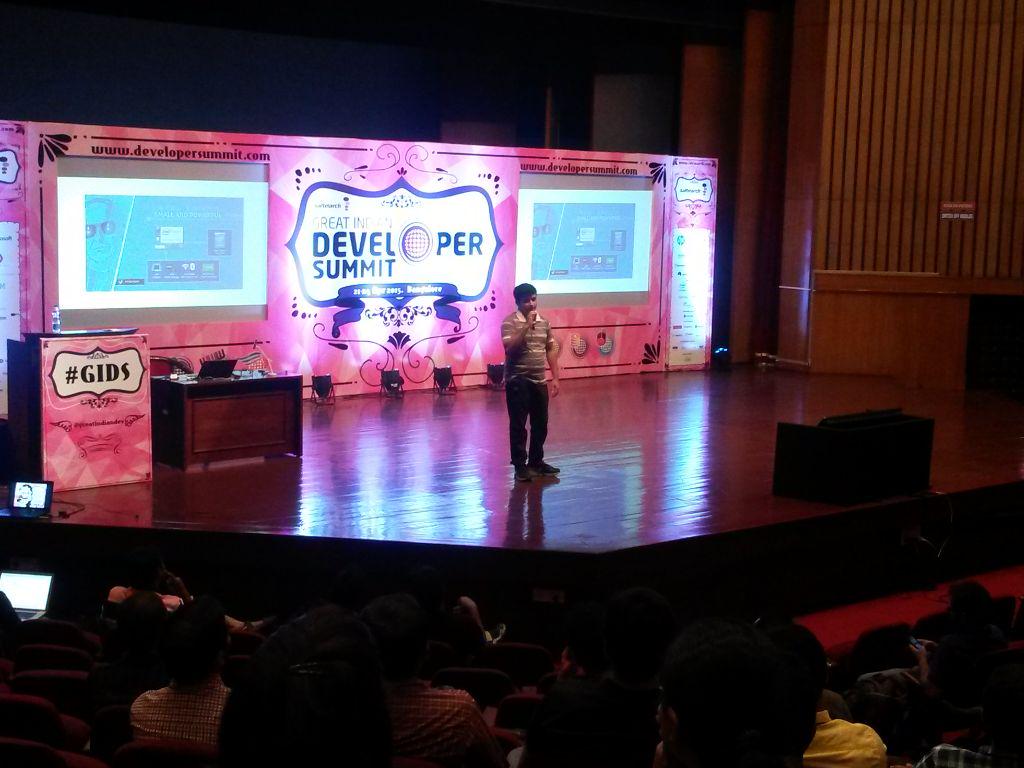
Raghavendra Ural talking about Intel iot developer kit, edison, galileo and arduino
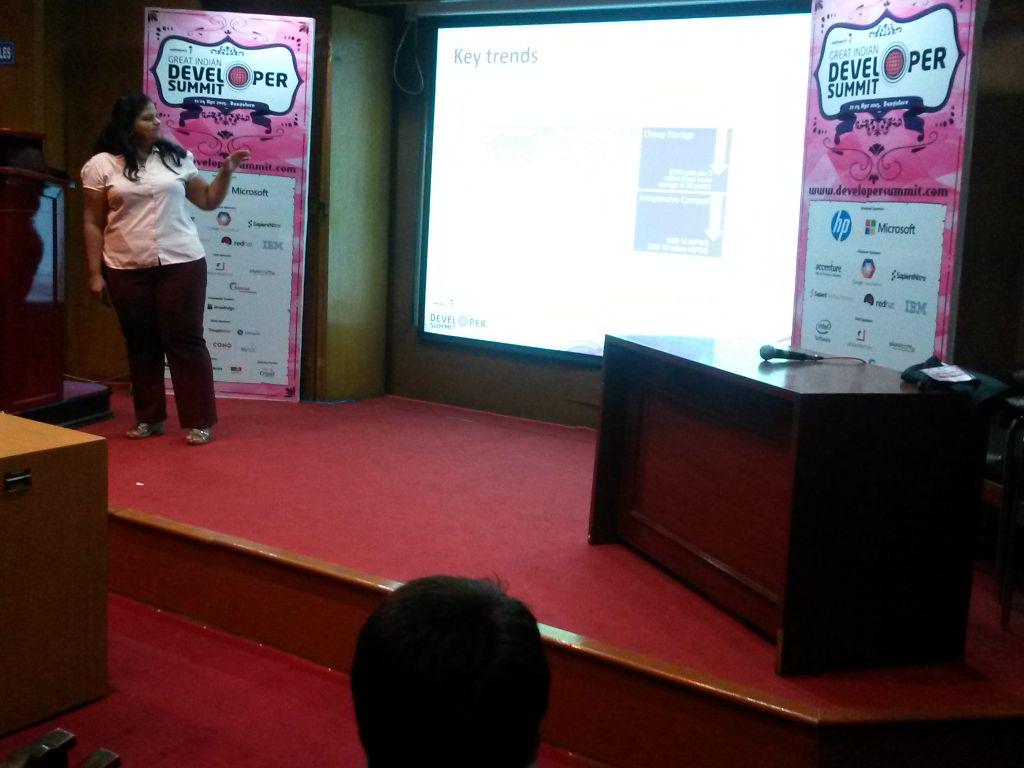
Deepthi Anantharam explaining data analytics using open source on MS Azure.
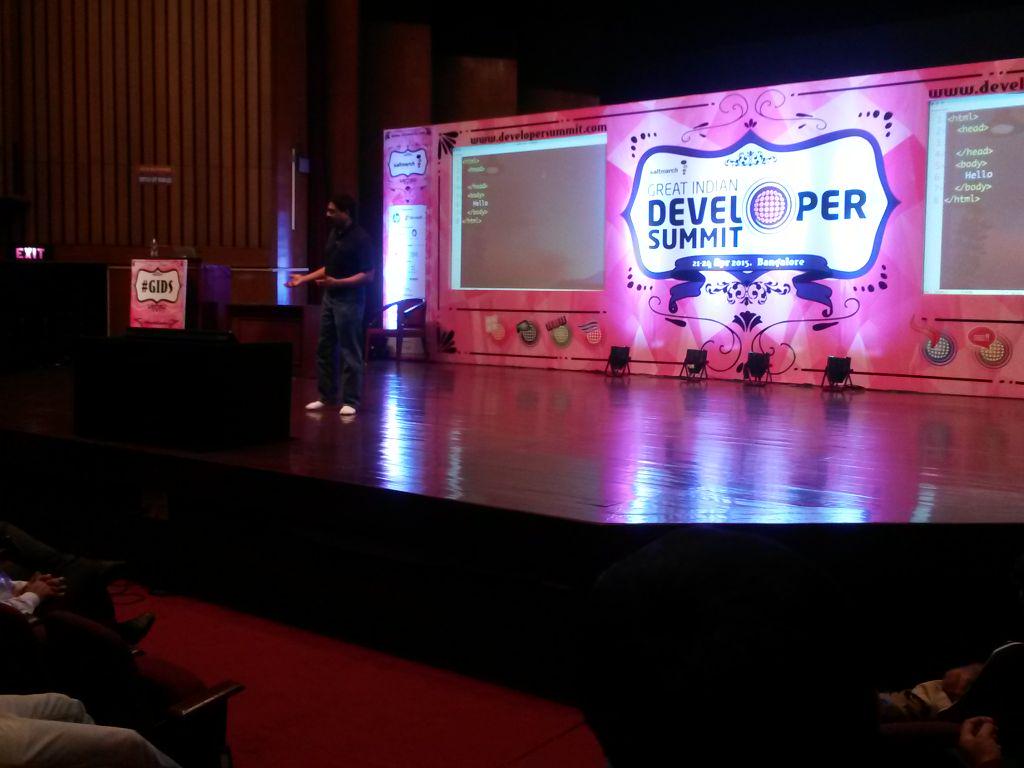

@venkat_s (Venkat Subramaniam) giving a captivating and insightful intro to angularjs.
His talk are highly captivating due their story-like character. One quote: “You learn when things don’t work. Type in, and never copy paste code”.
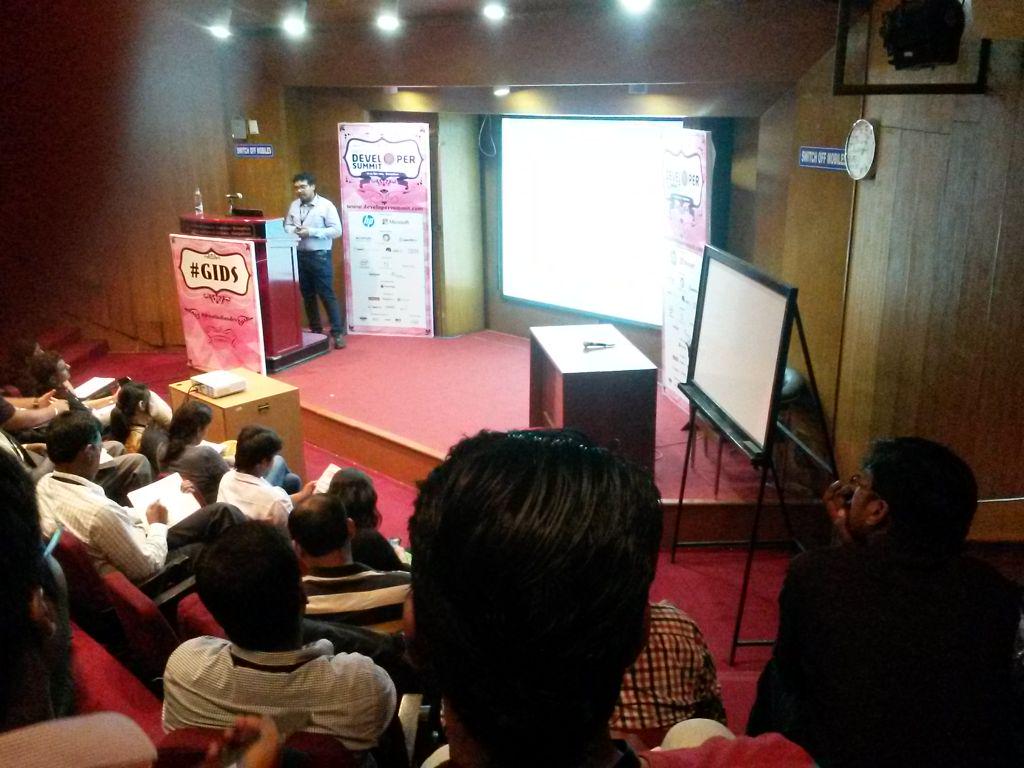


Mohammad S of Sapient tells us how Spring XD converts the “open source zoo” to “open source circus”. I learnt a lot about using Spring XD for processing big data, from this session.


@venkat_s says java 8 involves moving from imperative to functional or declarative programming. Quote: “Good code should read like a story, not like a puzzle”. Java 8 has introduced beautiful and expressive syntax.


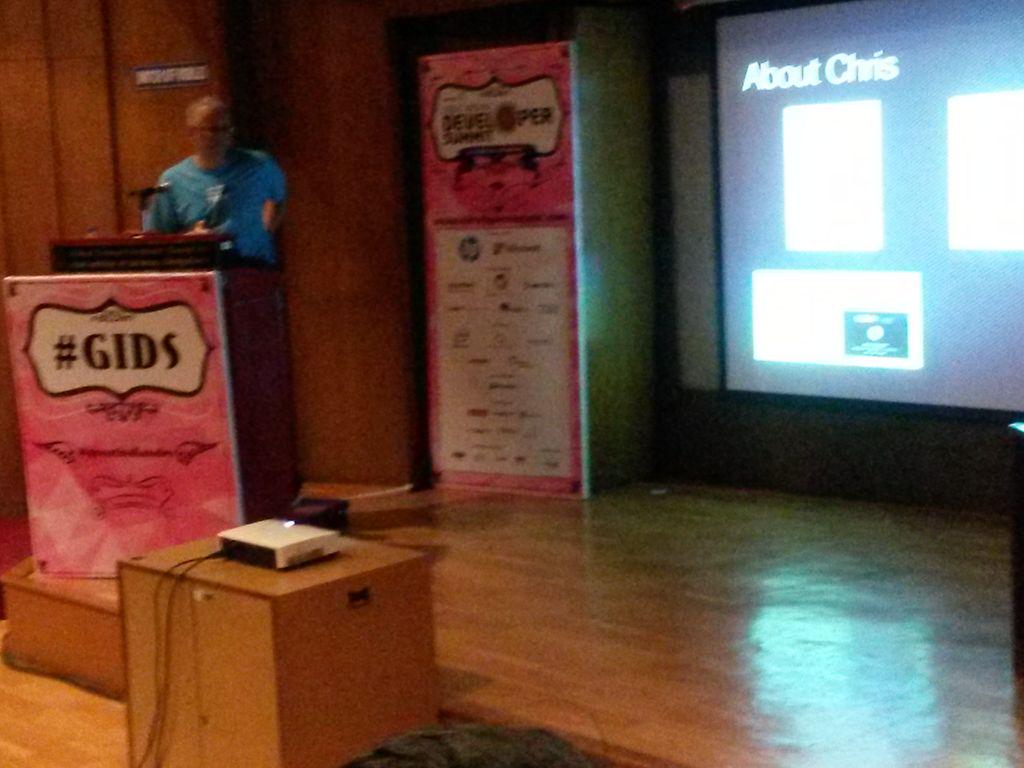
There was a session on functional programming by Chris Richardson. He is very soft spoken and explains things philosophically. As you can see from the images, his pictorial representation are great. He quoted Tony Hoare:”The highest goal of programming language design is to enable good ideas to be expressed elegantly”. Another interesting tidbit: Guess who invented the null pointer ? Tony Hoare, who later called it his billion dollar mistake.
#GIDS Day 4: GIDS.DATA
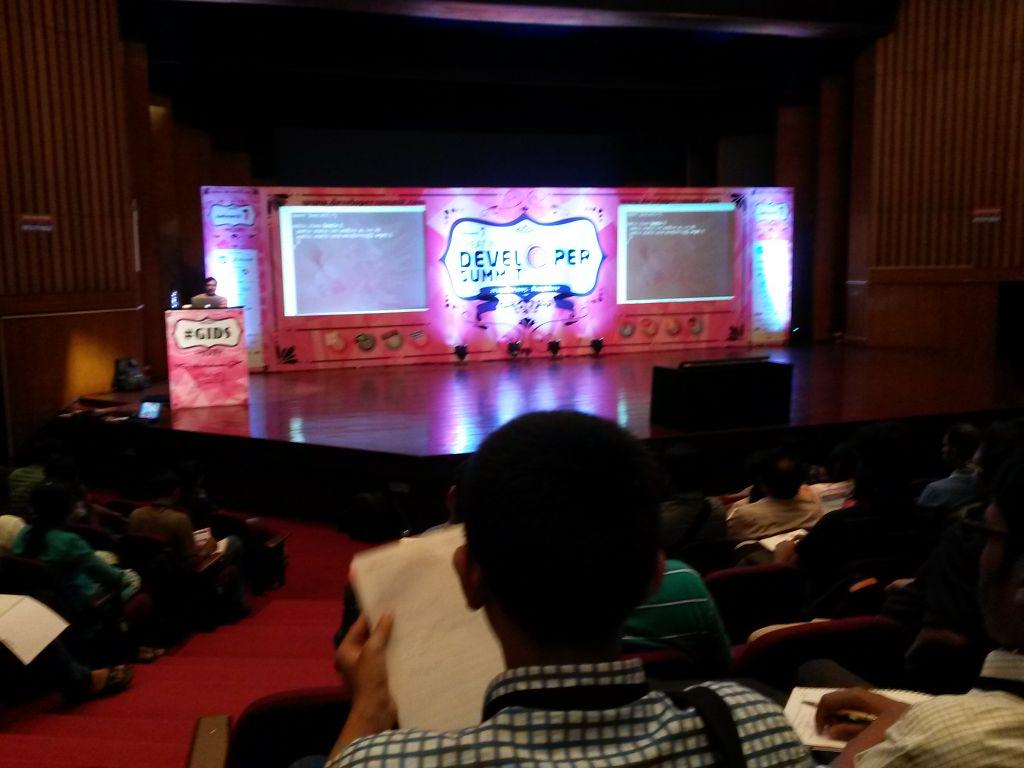
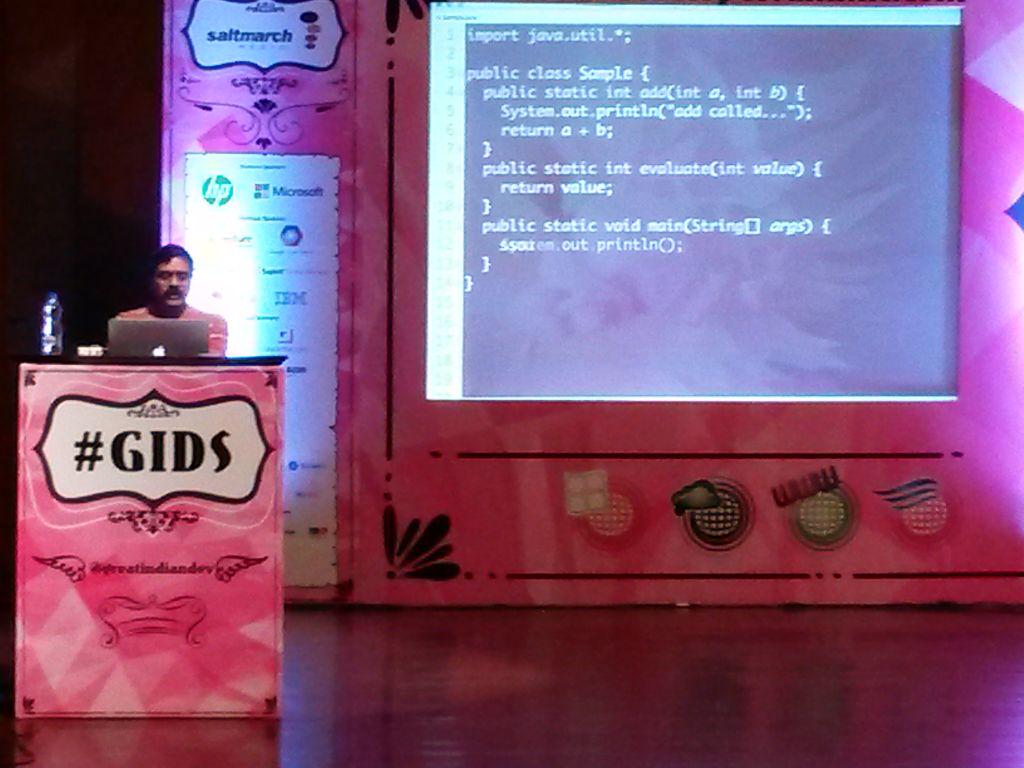
There was yet another session by Venkat Subramaniam on Java 8: Lets Get Lazy. It was about lazy evaluation on Java 8, and its positive impact on performance. Quotes:
- “In Java 8, lazy evaluation comes from the use of lambdas”
- “In computer science almost any problem can be solved by adding a level of indirection”
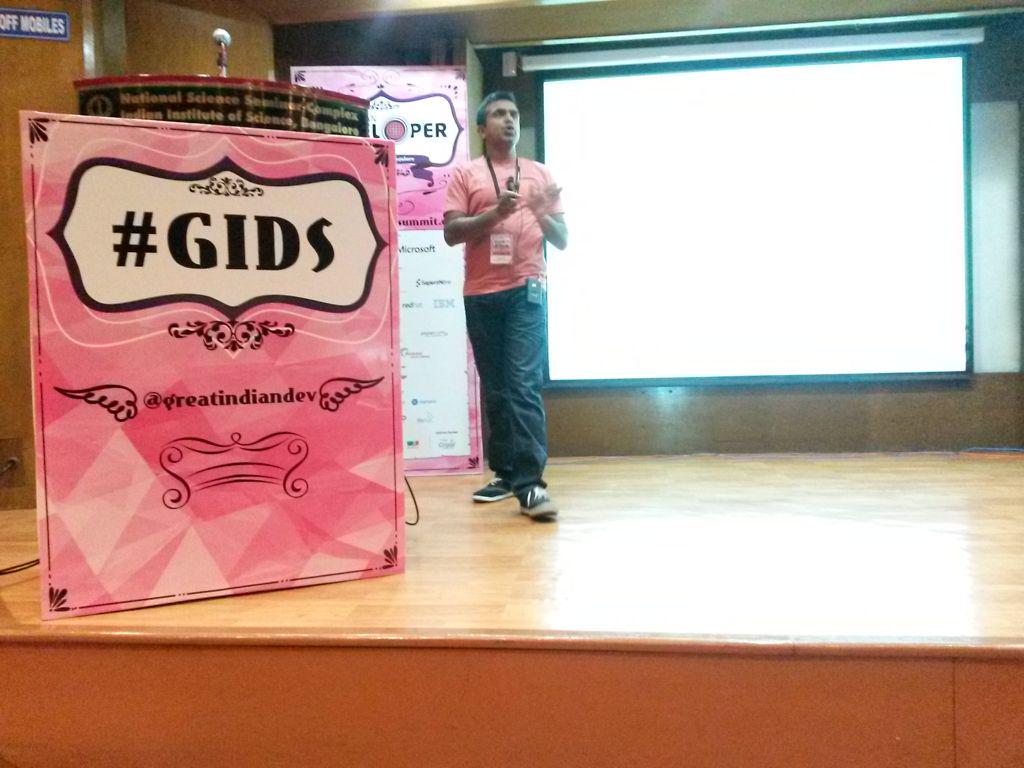


The talk by Regunath B of Flipkart was useful, since I am working on a tool that needs this feature: data synchronization. The Aesop framework that he talked about seems feature rich and scalable. The data synchronization is intended for use in data synching between sql and nosql systems.
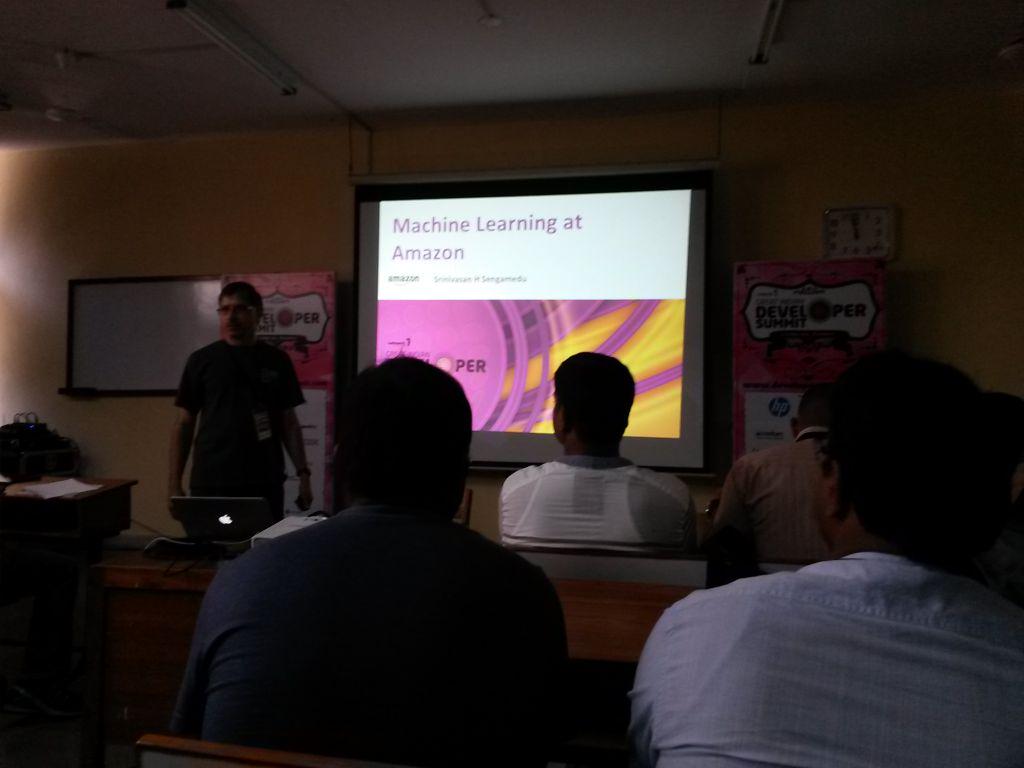


Srinivasan S of @amazon talking about their machine leaning apps. This session was about Amazon’s various business lines that use Machine Learning. He said that @AmazonFresh same day or early morning grocery delivery uses machine learning to forecast demand.
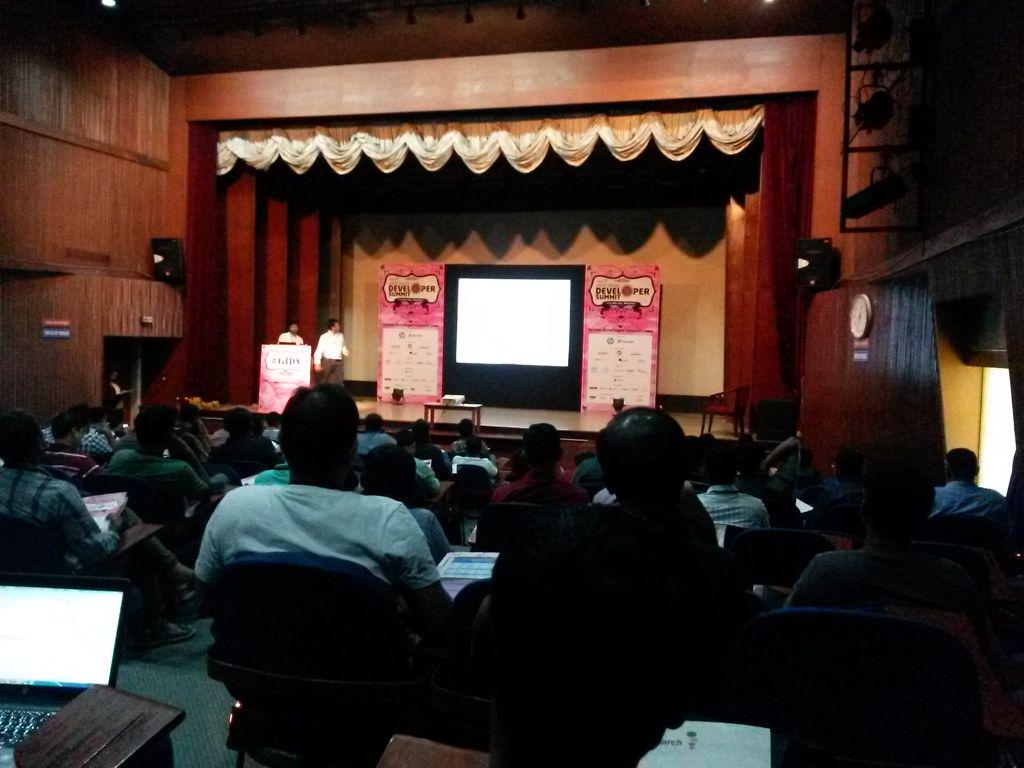


There were two sequential sessions by Sarath G and his colleague from Broadridge. The first one was about using about Apache Spark and the second one about Operationalizing data analytics.
Quote: “The algorithm supported is a core decision criteria for deciding on the tool to operationalize your ML project”.
Their long and deep experience with Data analytics was visible in the sessions. Sample their knowledge in the images above.
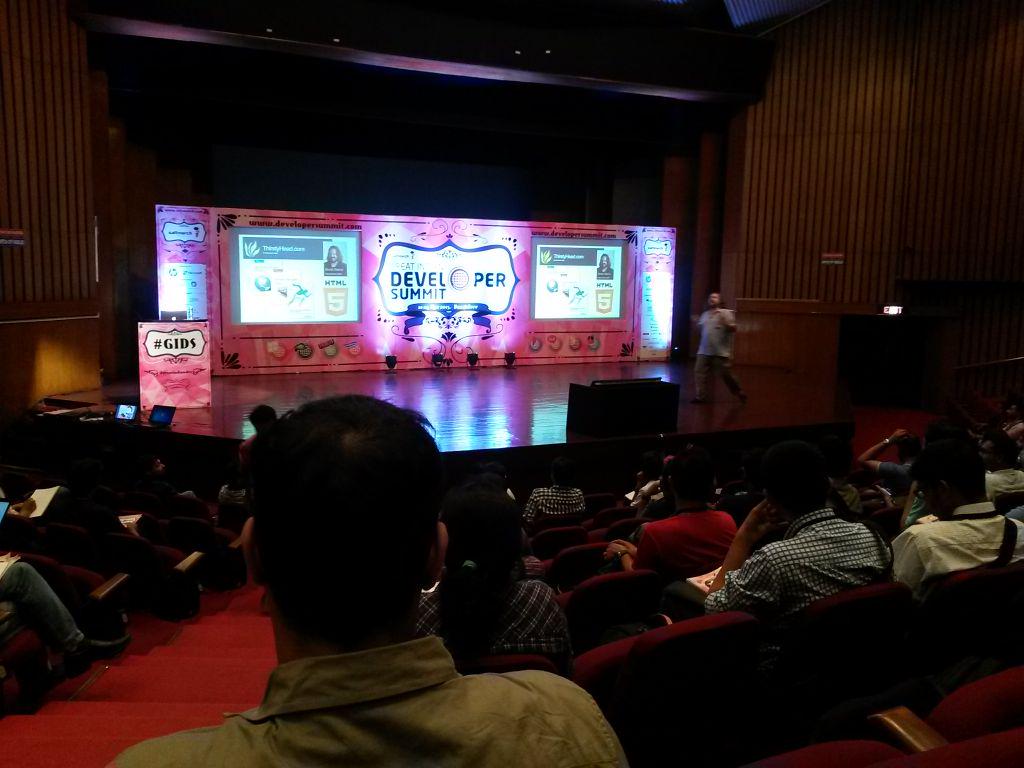
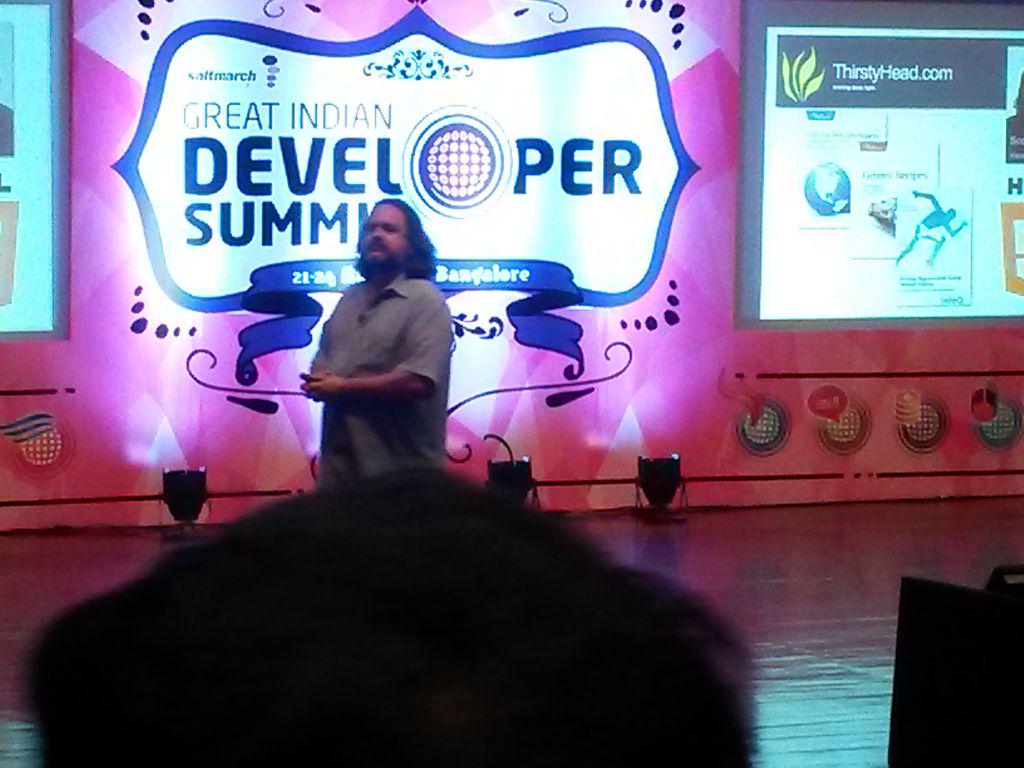


The session on NoSQL systems by Scott Davis(@scottdavis99) was interesting. He kept showing eye catching photos that were relevant to the topic and making jokes. This captured everyone’s attention, even though its was post lunch  . By the way, the black and white photo of a dilapidated bridge represents the state of Object Relation Mapping(ORM), according to Scott.
Quotes
- “Relational databases are one of the biggest Golden Hammers in software development today”.
- “Cluster of unreliable commodity hardware is CouchDB ! MongoDB is from humongous”
He explained NoSQL using MongoDB as an example, and how the json model is more apt for mapping to objects.
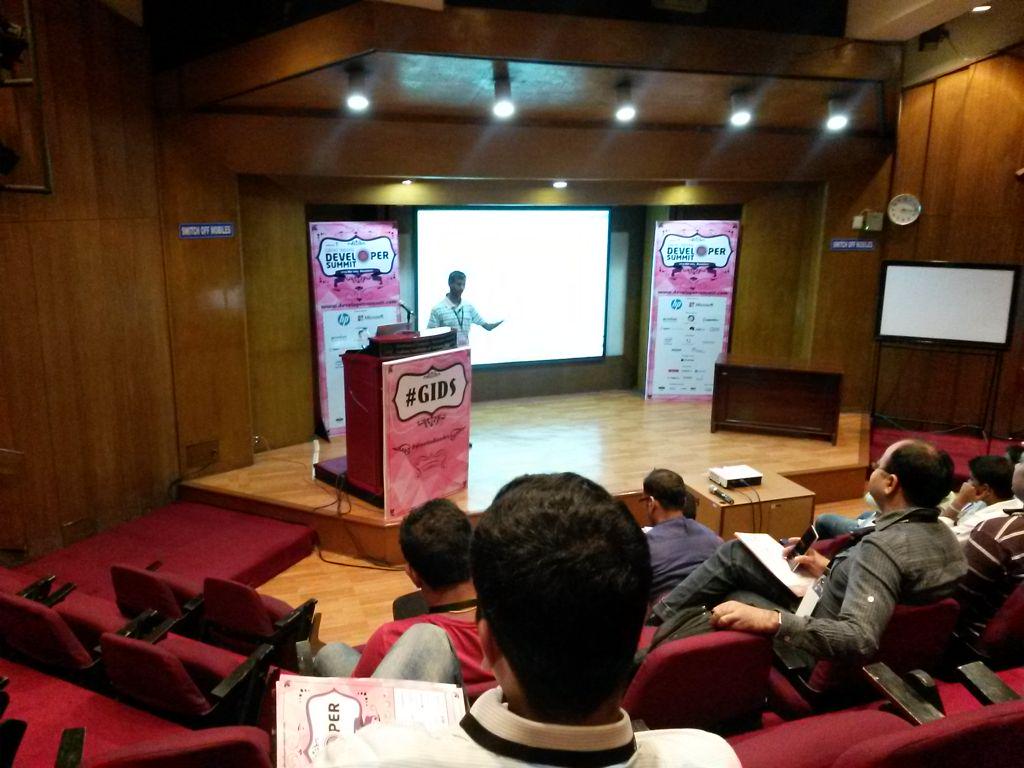


Next I attended a session by Srinath S of InMobi. It was about how Apache Falcon can be used to manage and orchestrate the flow of big data in an organization. As you can see from the images, it was an animated session. It looks like InMobi contributed Falcon to open source. InMobi is a big contributor to the Hadoop project. Apache Falcon provides abstractions for infra, data and processing, for big data clusters. It internally uses Apache Oozie and HCatalog.


Ofcourse I was a presenter on the GIDS.DATA day. My session was on Apache Spark and Zeppelin. How to combine them for big data visualization projects. It attracted a lot of interest and questions. The room was overflowing. I gave an overview of the Spark tool set and a set of the views generated using Zeppelin. Zeppelin is unique in that there are not many open source tools for big data visualization and exploration.
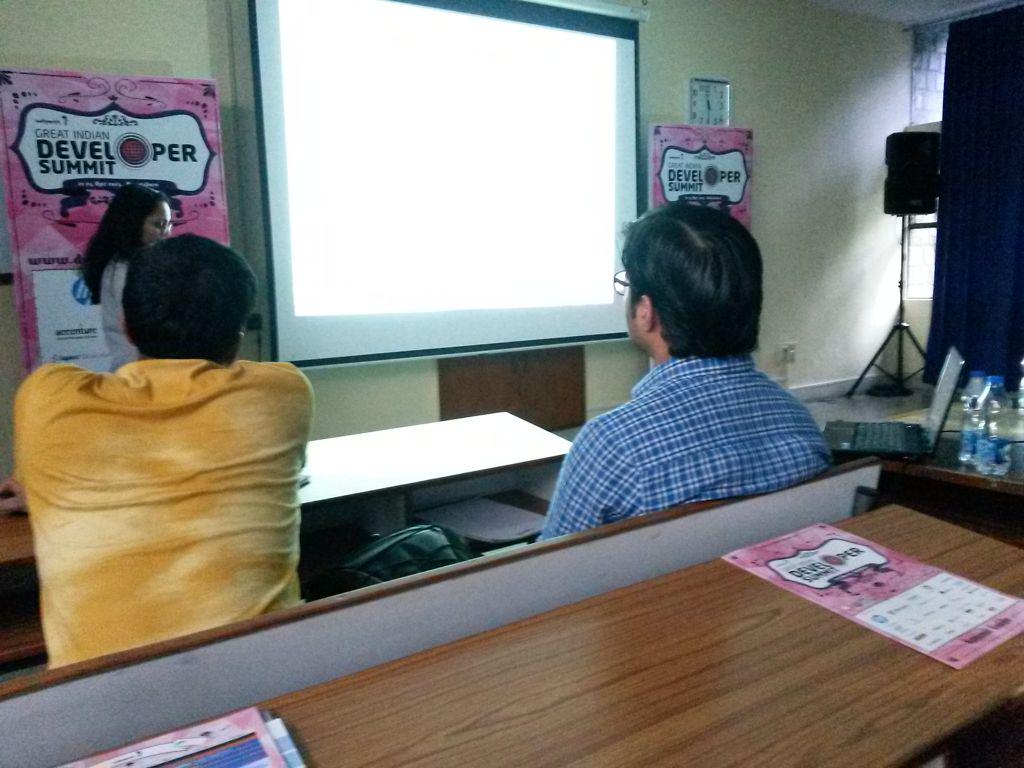


The last session of the day that I attended was by Namitha S of Cisco. It was about data science, and choosing the right algorithm for machine learning. Namitha explained the various categories algorithms used for machine learning like regression, classification, clustering, reinforcement; and different terms like bias and variance when we do curve fitting to our data set.
Well, that was it. A great conference, great networking and lot of learning.
The photo gallery is on flickr at the GIDS album here. And the conference presentations are here.
 Learn and teach good programming